

I am often asked: What is the most challenging part about writing a historical fiction novel and how hard it is to write when you’ve never really experienced that time period? May I tell you a story in reply?
When I was about nine years old, my aunt took me, along with my brother and her own daughter, on a daytrip to the Ohio countryside where she was born. A mother of five and a busy world-renowned composer of choral music, she had never singled me out before. In fact, I would never go on a trip with her again. But that summer day I was curious to see where Aunt Ruth and my mother and their family grew up. And so I slid into the backseat, bound for Eden, Ohio, as it was so picturesquely named.
I was enthralled. The white clapboard family farmhouse, built in the 1800s, had the privilege of overlooking the dirt road that divided Ohio and Indiana. A kid could throw an acorn from the front porch in Ohio and hit Indiana. Corn fields, with tasseled stalks higher than I was tall, stretched in all directions. Cows slept under a dusty oak tree (which made me think of my mother, who told me of making the mistake of riding their Bessie when she was little.)
A stroll down the rutted road to the paved crossroad took us to their redbrick, one-room schoolhouse. Through its cob-webbed windows, I saw old iron and wood desks stacked up to the crumbling plaster of the ceiling. As we walked back to the car, grasshoppers sprang from the fields and latched onto our arms with their prickly legs. Otherwise, it was just us and the corn and the cows. I felt as if I had gone back in time.
We drove the back roads to return to Fort Wayne, hitting the Dairy Queen for a Mr. Misty, what I thought then was the highlight of the trip. But Aunt Ruth didn’t take me home. She took me to her house, sat me down, and handed me a sheet of paper.
Write about what you saw, she said.
At first I was surprised, then annoyed. I’d had my Mr. Misty; I was ready to get back to my usual neighborhood street kickball game. But one didn’t say no to Aunt Ruth. Forced to write or miss the game, I wrote about being a girl from rural 1920s Ohio, putting in all the sights and sounds that I’d experienced that day. After a few minutes, I forgot about kickball. I forgot about everything but writing. It didn’t hurt that when I was done, Aunt Ruth praised my work to the skies. But it would be decades before I realized the significance of that trip. It was the true beginning of my vocation for writing historical novels.
Nowadays I don’t have to be forced or tempted with Mr. Mistys to write stories set in the distant past. It’s what I love to do, so I don’t find it hard. Time-consuming, yes, and there is that extra challenge of making up a story while sticking with actual events. But that’s the fun part. I get to pick a character and read everything possible about them. I get to learn what was going on in the world at their time, what the customs and the dress were, what foods they ate, what they did on a typical day. At the same time I get to read all I can about everyone who was connected to them. And then I get to travel to the setting.
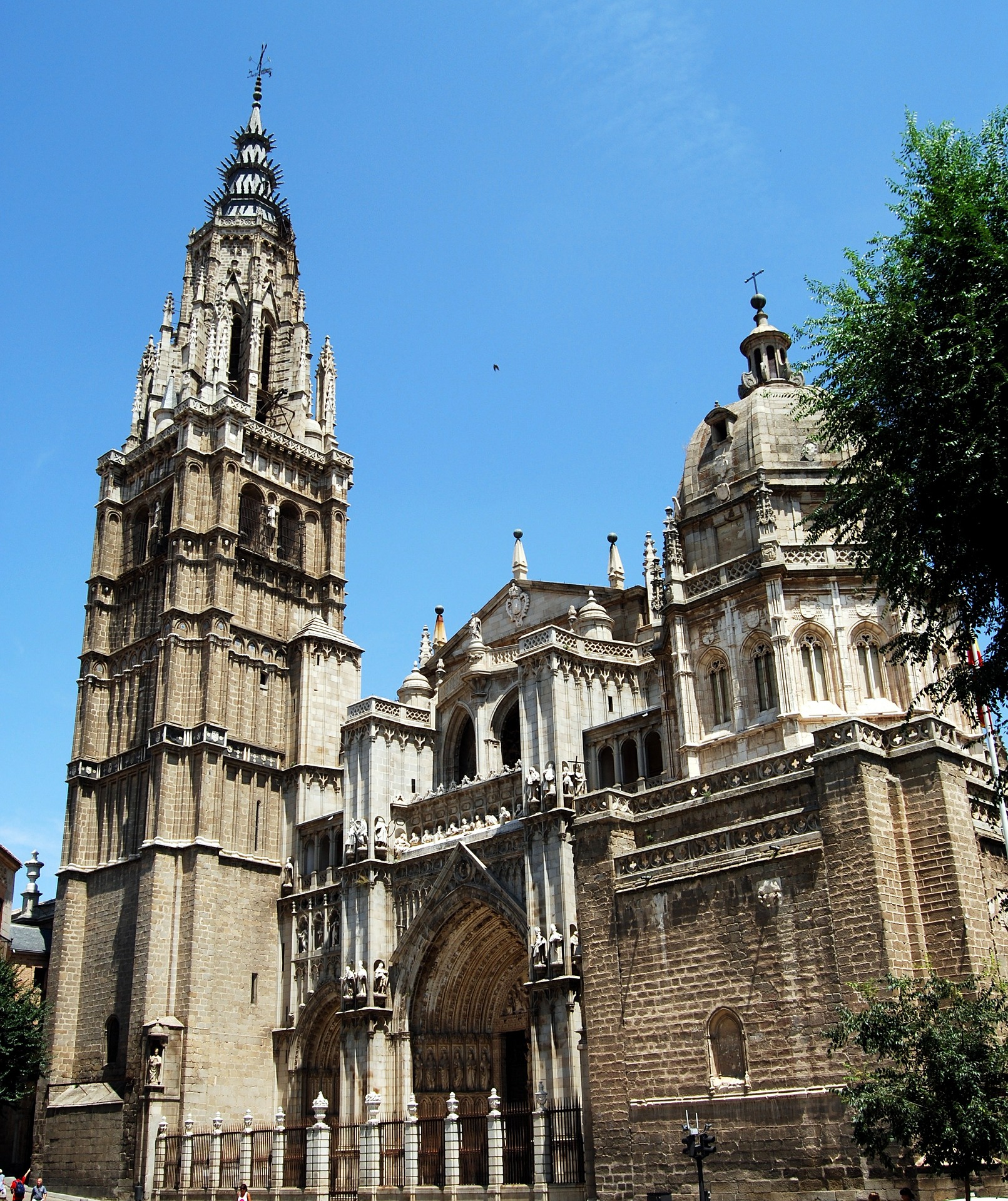
Just like when touring Ohio with Aunt Ruth, I think about all the senses when I’m in these places. How do the mountains outside of Segovia smell? –Like moss, wet stone, and fresh piney air. What does it feel like to walk along a stream in the woods near Valsain? –The grassy ground is mushy, due to mole tunnels. What does the stone feel like of the buildings in Segovia? –Rough and chalky. It’s yellow, as is the soil. What does Castilian garlic soup taste like? –There’s a salty burst of fat on the tongue from the tiny chunks of pork, followed by the richness of poached egg yolk. How does a bird sound when trapped within the dome of the Cathedral in Toledo? –Let me tell you, there are few more heartbreaking sounds than the cries of a frantic bird echoing from cold stone piers of an ancient church.
These pieces form a puzzle just waiting to be put together. My task and my joy is to think of the story that links them together. I can’t imagine a more exhilarating game, and I’m grateful to be able to play it. Who knew that an afternoon road trip to the quiet fields of Eden, Ohio would be my start?